
Peptides are one of the most-marketed ingredient categories in skincare. They are also one of the most misunderstood. The research behind specific peptides ranges from robust to nearly nonexistent — but marketing treats them all as if the evidence is equal.

Research
Peptide Science7 min read
Peptides in Skincare: What the Evidence Actually Shows
The research behind specific peptides ranges from robust to nearly nonexistent, but marketing treats them all as equal. This article categorizes the major peptide types, assesses the published evidence for each, and explains the bioavailability challenge that determines whether a peptide in a jar can become a peptide in your skin.
February 16, 2026
Key Takeaways
The research behind specific peptides ranges from robust to nearly nonexistent, but marketing treats them all as equal. This article categorizes the major peptide types, assesses the published evidence for each, and explains the bioavailability challenge that determines whether a peptide in a jar can become a peptide in your skin.
This article categorizes the major peptide types used in skincare, assesses the published evidence for each, and explains the bioavailability challenge that determines whether a peptide in a jar can become a peptide in your skin.
What Are Peptides?
Peptides are short chains of amino acids — typically 2–50 amino acids linked together. They are smaller than proteins and serve as signaling molecules in biology, triggering specific cellular responses.
The category is broad. “Peptide skincare” encompasses molecules with fundamentally different mechanisms, different levels of published evidence, and different formulation challenges.
Types of Peptides in Skincare
Signal Peptides
Signal peptides send messages to cells, typically fibroblasts, instructing them to produce structural proteins.
Examples:
• GHK-Cu (Copper Tripeptide-1): The most extensively researched signal peptide. Modulates 4,000+ genes (Pickart et al., 2015, PMC4508379). Naturally occurring in human plasma.
• Palmitoyl Pentapeptide-4 (Matrixyl): Synthetic pentapeptide with a palmitic acid tail. Robinson et al. (2005) published a double-blind study showing wrinkle depth improvement over 12 weeks.
Carrier Peptides
Deliver trace elements (typically copper) to the skin. GHK-Cu functions as both signal and carrier peptide.
Enzyme Inhibitor Peptides
Inhibit enzymes that break down structural proteins, particularly MMPs. Mostly preclinical evidence.
Neurotransmitter-Affecting Peptides
Modulate neurotransmitter release at the neuromuscular junction. Examples:
• Acetyl Hexapeptide-3 (Argireline): Inhibits SNARE complex formation. Published in vitro mechanism but limited clinical data.
“The research behind GHK-Cu spans five decades and multiple independent laboratories. Most other cosmetic peptides lack published human clinical trials entirely.”
The Evidence Hierarchy
Strong Evidence
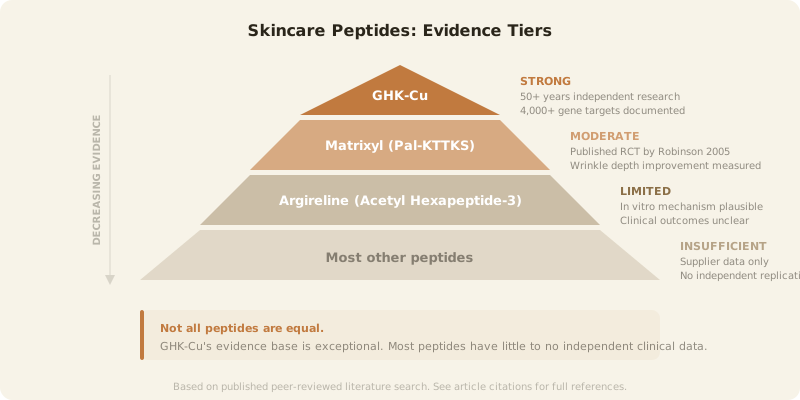
GHK-Cu: 50+ years of research. Wound healing, gene expression, collagen synthesis, MMP regulation all documented in peer-reviewed journals. Natural decline with age provides biological rationale.
Moderate Evidence
Palmitoyl Pentapeptide-4 (Matrixyl): Double-blind, placebo-controlled study. Small sample sizes but sound methodology. Limited independent replication.
Limited Evidence
Acetyl Hexapeptide-3 (Argireline): In vitro mechanism demonstrated. Clinical data limited with modest effects. Penetration depth question unresolved.
Most other cosmetic peptides: Cell culture studies but lack published human clinical trials.
Insufficient Evidence
Peptides marketed primarily on supplier claims without peer-reviewed publication.
The Bioavailability Challenge
The 500 Dalton Rule
Bos and Meinardi (2000): molecules above 500 Da have difficulty penetrating intact skin barrier.
• GHK-Cu: ~403 Da — below the threshold
• Palmitoyl Pentapeptide-4: ~802 Da — above, but palmitic acid tail added for penetration
• Acetyl Hexapeptide-3: ~889 Da — above the threshold
Lipophilic Modifications
Some peptides are modified with fatty acid tails (palmitoylation) to improve penetration.
Delivery Vehicle Matters
Aqueous serums provide short-duration delivery. Lipid-based systems provide extended contact time. Liposomal encapsulation further improves delivery.
“GHK-Cu at ~403 Da falls below the 500 Dalton penetration threshold. Most other cosmetic peptides do not.”
How to Evaluate Peptide Products
• Identify which peptide (specific INCI name)
• Check the evidence (peer-reviewed research for that specific molecule)
• Consider molecular weight (below or above 500 Da?)
• Assess concentration (disclosed? In published study range?)
• Evaluate the delivery vehicle
References
Robinson, L.R., et al. (2005)
Topical palmitoyl pentapeptide provides improvement in photoaged human facial skin
Bos, J.D., Meinardi, M.M. (2000)
The 500 Dalton rule for the skin penetration of chemical compounds and drugs
Continue reading

Peptide Science
The Complete Guide to GHK-Cu in Skincare
Your skin already makes GHK-Cu. It just makes less of it every year.
18 min read

Peptide Science
GHK-Cu vs. Other Copper Peptides: What the Research Shows
"Copper peptide" is a category, not an ingredient. Three compounds carry the label — and their evidence bases are not interchangeable.
10 min read

Consumer Guide
Why Skincare Concentrations Matter (And Why Most Brands Hide Them)
You wouldn’t buy a vitamin supplement that said “Contains Vitamin D” without the dose. That’s exactly how most skincare is sold.
9 min read
Curious about the product?