
Your skin already makes GHK-Cu. It just makes less of it every year.

Research
Peptide Science18 min read
The Complete Guide to GHK-Cu in Skincare
GHK-Cu is a naturally occurring tripeptide with over 50 years of published research. This comprehensive guide covers the science: what GHK-Cu is, how it works at the molecular level, what clinical evidence exists, how concentration affects outcomes, and what to look for when evaluating products.
February 16, 2026
Key Takeaways
GHK-Cu is a naturally occurring tripeptide with over 50 years of published research. This comprehensive guide covers the science: what GHK-Cu is, how it works at the molecular level, what clinical evidence exists, how concentration affects outcomes, and what to look for when evaluating products.
GHK-Cu — short for glycyl-L-histidyl-L-lysine copper — is a tripeptide naturally present in human blood plasma, saliva, and urine. It was first isolated in 1973 from human albumin by Dr. Loren Pickart, who observed that liver tissue from older donors behaved like younger tissue when exposed to it. That observation launched five decades of research into what this molecule actually does.
This guide covers the published science: what GHK-Cu is, how it works at the molecular level, what clinical evidence exists, how concentration affects outcomes, and what to look for when evaluating GHK-Cu skincare products. Every claim references a specific study.
What Is GHK-Cu?
A tripeptide is a chain of three amino acids. GHK-Cu consists of glycine, histidine, and lysine, bound to a copper(II) ion. At approximately 403 Daltons molecular weight, it falls below the 500-Dalton threshold generally considered the upper limit for skin penetration (Bos & Meinardi, 2000, Experimental Dermatology).
60%
decline in plasma GHK-Cu levels from age 20 (~200 ng/mL) to age 60 (~80 ng/mL)
Your body produces GHK-Cu naturally. Plasma concentrations in healthy young adults average around 200 ng/mL. By age 60, that number drops to approximately 80 ng/mL — a 60% decline (Pickart & Margolina, 2018, International Journal of Molecular Sciences, PMC6073405).
That decline matters because GHK-Cu is not a single-function molecule. Gene expression studies show it influences over 4,000 human genes — roughly 6% of the human genome (Pickart et al., 2015, BioMed Research International, PMC4508379). The affected pathways include collagen synthesis, antioxidant defense, DNA repair, and stem cell biology.
A Brief History
1973: Loren Pickart isolates GHK from human plasma while studying aging differences in liver tissue synthesis at the University of California, San Francisco.
1980s–1990s: Wound healing studies demonstrate GHK-Cu accelerates tissue repair. Research teams document collagen synthesis stimulation, angiogenesis promotion, and anti-inflammatory effects in multiple wound models.
1999–2000: Siméon and colleagues publish two landmark studies in the Journal of Investigative Dermatology. The first shows GHK-Cu stimulates glycosaminoglycan synthesis — including hyaluronic acid and dermatan sulfate — and increases decorin production, a key structural proteoglycan (Siméon et al., 1999, PMID 10469320). The second demonstrates GHK-Cu modulates matrix metalloproteinase (MMP) expression during wound healing, upregulating MMP-2 for collagen remodeling while regulating MMP-1 (Siméon et al., 2000, PMID 10886523).
2003: Canapp and colleagues show topical GHK-Cu accelerates wound healing under ischemic (low blood flow) conditions in a clinical wound model (Veterinary Surgery, PMID 14569573).
2007: Arul and colleagues demonstrate GHK-Cu accelerates wound closure in diabetic models, stimulating both angiogenesis and collagen deposition (Life Sciences).
2015: The landmark gene expression paper. Pickart, Vasquez-Soltero, and Margolina publish a comprehensive analysis showing GHK-Cu modulates 4,000+ human genes across multiple regenerative pathways (PMC4508379). This paper shifts the scientific understanding of GHK-Cu from “wound healing peptide” to “broad-spectrum regenerative signaling molecule.”
2018: Pickart and Margolina follow up with a review connecting GHK-Cu’s gene expression data to specific regenerative and protective actions, including upregulation of collagen Types I and III in dermal fibroblasts (PMC6073405).
How GHK-Cu Works: The Mechanism
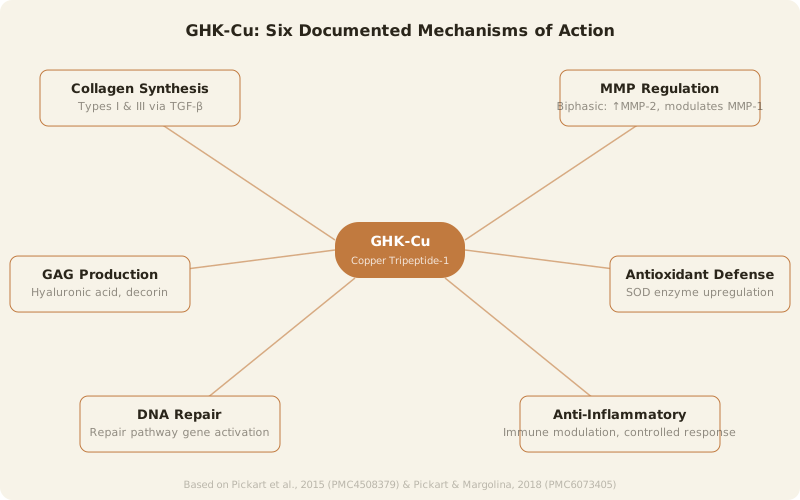
Understanding the mechanism matters because it separates evidence-based ingredients from marketing stories. GHK-Cu’s effects are documented across several interconnected pathways.
Collagen Synthesis
GHK-Cu upregulates the production of collagen Type I and Type III in human dermal fibroblasts (Pickart & Margolina, 2018, PMC6073405). These are the two primary structural collagens in skin — Type I provides tensile strength, Type III provides elasticity and is particularly abundant in younger skin.
The mechanism involves TGF-beta signaling pathway activation, which stimulates fibroblasts to produce new collagen matrix. This is not a surface-level effect. The peptide signals cells to build structural protein.
Matrix Metalloproteinase Regulation
This is where GHK-Cu gets interesting — and where most marketing oversimplifies.
Matrix metalloproteinases (MMPs) are enzymes that break down collagen and other extracellular matrix proteins. They are essential for healthy tissue remodeling: old, damaged collagen must be removed before new collagen can be deposited properly. But excessive MMP activity degrades healthy collagen faster than it can be replaced.
GHK-Cu demonstrates a biphasic response (Siméon et al., 2000, PMID 10886523):
• Upregulates MMP-2: Involved in controlled collagen remodeling — the constructive side of tissue turnover.
• Modulates MMP-1 and MMP-9: These are the “destructive” metalloproteinases. GHK-Cu helps regulate their activity so that collagen breakdown doesn’t outpace collagen synthesis.
“This biphasic action — simultaneously promoting controlled remodeling while limiting excessive degradation — is what distinguishes GHK-Cu from ingredients that simply stimulate collagen production. It manages both sides of the turnover equation.”
Glycosaminoglycan Synthesis
Glycosaminoglycans (GAGs) are the gel-like molecules that fill the space between collagen fibers in your skin. Hyaluronic acid is the most well-known GAG, but dermatan sulfate and other proteoglycans also play structural roles.
GHK-Cu stimulates GAG synthesis and increases decorin production (Siméon et al., 1999, PMID 10469320). Decorin is a small proteoglycan that regulates collagen fibril assembly — it influences how collagen fibers organize themselves. More decorin generally means better-organized collagen architecture.
Antioxidant Defense
The 2015 gene expression study (PMC4508379) identified GHK-Cu upregulation of genes involved in antioxidant defense, including superoxide dismutase (SOD) pathways. SOD enzymes convert superoxide radicals — one of the most damaging reactive oxygen species — into less harmful molecules.
This is not the same as applying an antioxidant topically. GHK-Cu signals your own cells to produce more of their native antioxidant enzymes.
DNA Repair
The same gene expression analysis showed GHK-Cu activates genes involved in DNA damage repair pathways (Pickart et al., 2015, PMC4508379). UV exposure and oxidative stress continuously damage DNA in skin cells. The capacity to repair that damage declines with age — the same age range where GHK-Cu levels decline.
Anti-Inflammatory Action
GHK-Cu attracts immune cells to wound sites while simultaneously modulating inflammatory signaling to prevent excessive inflammation (Pickart, 2008, Journal of Biomaterials Science, Polymer Edition). This dual action — recruiting the immune response while keeping it controlled — is relevant to both wound healing and chronic low-grade skin inflammation associated with aging.
Stem Cell Biology
Gene expression data indicates GHK-Cu activates pathways involved in stem cell maintenance and differentiation (Pickart et al., 2015, PMC4508379). The clinical significance of this finding for topical skincare is still being investigated, but it adds to the picture of GHK-Cu as a molecule involved in fundamental tissue maintenance signaling.
What the Published Evidence Actually Shows
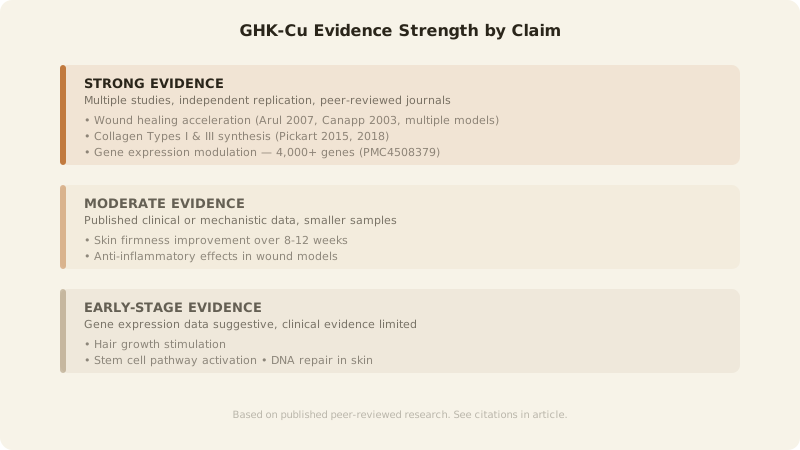
Research claims require context. Here is what the published literature demonstrates, organized by evidence quality.
Strong Evidence (Multiple Studies, Replicated Findings)
Wound healing acceleration. Multiple independent studies across different wound models — including diabetic wounds (Arul et al., 2007), ischemic wounds (Canapp et al., 2003), and standard wound models — consistently show GHK-Cu accelerates wound closure, collagen deposition, and angiogenesis. This is GHK-Cu’s most robustly documented effect.
Collagen synthesis stimulation. Both in vitro (cell culture) and in vivo (animal model) studies demonstrate increased collagen Types I and III production in response to GHK-Cu. The Pickart lab has published this finding across multiple papers spanning two decades.
4,000+
human genes modulated by GHK-Cu across regenerative pathways
Gene expression modulation. The 2015 Broad Institute-analyzed gene data (PMC4508379) represents a large-scale genomic analysis showing GHK-Cu affects 4,000+ genes. This is reproducible data, though the clinical translation of every individual gene change is not fully established.
MMP regulation. The Siméon et al. studies (1999, 2000) in the Journal of Investigative Dermatology provide direct evidence of MMP modulation in wound tissue. These are peer-reviewed studies in a respected dermatology journal.
Moderate Evidence (Smaller Studies, Early Clinical Data)
Skin firmness and appearance improvement. Published studies report improvement in skin elasticity and reduction in fine line appearance over 8–12 week application periods. However, sample sizes tend to be small, and study designs vary in rigor. One frequently cited study reported improvement in 70% of subjects over 12 weeks, though the specific methodology deserves scrutiny.
Anti-inflammatory effects. Animal model studies show clear anti-inflammatory action. Translation to chronic human skin inflammation (as opposed to acute wound inflammation) has less direct evidence.
Early-Stage Evidence (Needs More Research)
Hair growth stimulation. Gene expression data suggests GHK-Cu may activate pathways relevant to hair follicle biology. Some preliminary studies support this, but robust clinical trials for hair growth are limited.
Stem cell effects. The gene expression data is suggestive, but clinical evidence for topical stem cell pathway activation in human skin is minimal.
DNA repair in skin. While the gene expression data shows upregulation of repair pathways, demonstrating that topical GHK-Cu meaningfully improves DNA repair in human skin at cosmetic concentrations requires further study.
What Honest Assessment Looks Like
GHK-Cu has stronger published evidence than most peptides used in skincare. The wound healing data is robust. The collagen and MMP data is solid. The gene expression analysis is large-scale and published in peer-reviewed journals.
What GHK-Cu does not have is a large body of randomized, double-blind, placebo-controlled trials specifically for cosmetic skin aging outcomes — the gold standard for clinical evidence. Most peptides in skincare share this gap. The research that exists is substantive but largely mechanistic (explaining how it works at the cellular level) rather than large-scale clinical (demonstrating outcomes across hundreds of subjects).
““Published research supports GHK-Cu” is a different statement than “clinical trials prove GHK-Cu reverses wrinkles.” Both statements can be true simultaneously, but they represent different levels of certainty.”
Concentration: Why It Matters and What to Look For
Most skincare brands list GHK-Cu (as Copper Tripeptide-1) on their ingredient label without disclosing concentration. This is the single most important variable determining whether a product delivers enough active ingredient to matter.
What the Research Uses
GHK-Cu is active at remarkably low concentrations in laboratory settings — picomolar to nanomolar ranges in vitro (Pickart et al., 2015, PMC4508379). But in vitro means the peptide is applied directly to cells with no barrier to cross.
Your skin has a barrier. The stratum corneum — the outermost layer — is specifically designed to keep foreign molecules out. A topical product needs a much higher applied concentration than the in vitro active concentration to deliver enough peptide through that barrier to reach viable skin cells.
Clinical and OTC formulations that report measurable results typically use concentrations in the 1–3% range. This is the concentration window where enough GHK-Cu can cross the skin barrier to reach the dermal layer where fibroblasts produce collagen.
The Transparency Problem
As of 2026, the overwhelming majority of GHK-Cu skincare brands do not disclose their concentration. You can see “Copper Tripeptide-1” on the INCI list, confirming the ingredient is present, but not how much.
INCI labeling rules require ingredients to be listed in descending order of concentration — but only above 1%. Below 1%, ingredients can be listed in any order. Since most GHK-Cu formulations use 1% or less, the position on the ingredient list tells you very little about the actual amount.
Tip
A product with 0.001% GHK-Cu and a product with 1% GHK-Cu are not the same product, even though both can legally list “Copper Tripeptide-1” in the same position on their labels.
How to Evaluate
When assessing a GHK-Cu product, look for:
• Disclosed percentage. Does the brand state a specific concentration (e.g., 1% w/w)? If not, you cannot evaluate efficacy.
• Absolute amount. Even better than percentage: exact milligrams per container. This eliminates ambiguity about what “1%” means relative to total product weight.
• Third-party verification. Does the brand provide or reference a Certificate of Analysis (CoA) from an independent lab? A CoA confirms the stated concentration matches what is actually in the jar.
• Concentration rationale. Does the brand explain why they chose their concentration? A brand that understands the research can tell you why they chose 1% over 0.1% or 3%.
If a brand cannot or will not answer these questions, you are buying on trust rather than data.
Formulation Types and Delivery
GHK-Cu is hydrophilic — it dissolves in water, not oil. Its partition coefficient (log D) falls between -2.38 and -2.49, indicating strong water affinity (Arul et al., PMC3016279). This creates a formulation challenge because the most effective delivery route into skin is through the lipid (fat-based) matrix of the stratum corneum.
Aqueous Serums
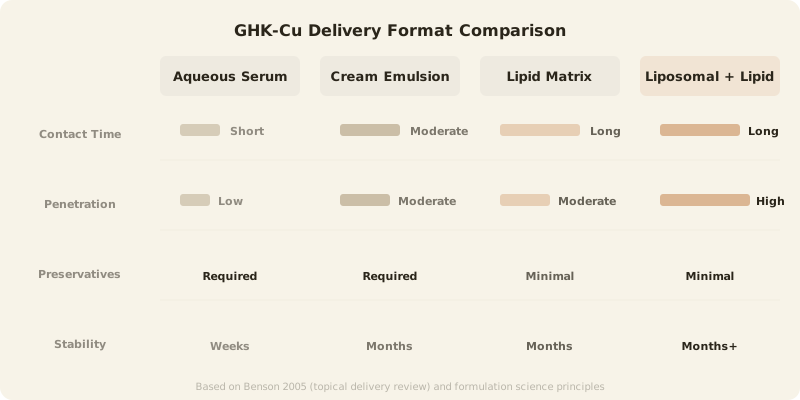
The most common format. GHK-Cu is dissolved in a water-based serum, sometimes with humectants like hyaluronic acid. Advantages: easy formulation, familiar format. Disadvantage: water evaporates, reducing skin contact time. Once the serum dries, any unabsorbed peptide sits on the skin surface without sustained delivery pressure.
Cream Emulsions
GHK-Cu dissolved in the aqueous phase of an oil-in-water or water-in-oil emulsion. The oil phase can provide some occlusion (barrier to evaporation), extending skin contact time compared to pure serums. However, the peptide still resides in the water phase of the emulsion, not in the lipid phase that interfaces with the skin barrier.
Lipid-Based Delivery (Tallow, Balm Formats)
A lipid-based formulation creates an occlusive layer on the skin surface. This serves two functions relevant to peptide delivery:
• Prevents evaporation of the aqueous peptide solution, maintaining skin contact time.
• Creates hydration pressure. The occlusive layer traps transepidermal water loss, increasing hydration in the upper stratum corneum. Hydrated stratum corneum is more permeable to molecules, including peptides (Benson, 2005, Current Drug Delivery).
The challenge is that a hydrophilic peptide does not naturally disperse in a lipophilic (fat-based) matrix. Effective lipid-based GHK-Cu delivery requires a bridging technology — typically liposomal encapsulation, where the peptide is enclosed in phospholipid vesicles that are compatible with both the fat matrix and the skin’s aqueous environment.
Liposomal Encapsulation
Liposomes are microscopic spheres made of phospholipid bilayers — the same type of structure that forms cell membranes. A hydrophilic molecule like GHK-Cu can be encapsulated within the aqueous core of a liposome, which then disperses readily in a lipid matrix.
When applied to skin, liposomes integrate with the lipid layers of the stratum corneum, releasing their payload into the viable epidermis. Published data indicates liposomal delivery can improve cell absorption of encapsulated peptides by several-fold compared to free peptide in solution.
The combination of liposomal encapsulation within a lipid-based delivery vehicle (tallow or similar) represents what the formulation science supports: protected peptide stability, extended skin contact time, and enhanced barrier penetration.
The Copper Uglies: What Happens During the Adjustment Period
One topic most GHK-Cu brands avoid: some users experience a temporary worsening of skin appearance in the first 2–6 weeks of use. In online skincare communities, this is called “the copper uglies.”
What Is Happening
The mechanism is directly related to MMP regulation. When you introduce GHK-Cu to skin, it stimulates the collagen remodeling process. Part of remodeling is the removal of old, damaged collagen by matrix metalloproteinases — particularly MMP-1 (collagenase).
In the early weeks, MMP-mediated breakdown of existing collagen can temporarily outpace new collagen synthesis. The visible result: fine lines may appear more pronounced, skin texture may look rougher, and overall appearance can worsen before it improves.
“This is not damage. It is the demolition phase of a renovation. The old, cross-linked, UV-damaged collagen is being cleared to make room for new, properly organized collagen.”
Expected Timeline
Based on published collagen turnover rates and user-reported patterns:
• Weeks 1–2: Skin adjusting. May see no change or slight increase in dryness.
• Weeks 2–6: Potential “copper uglies” window. Fine lines may appear temporarily more visible. Skin texture may feel different. This is peak MMP activity relative to new collagen deposition.
• Weeks 6–8: New collagen synthesis catches up. Visible improvement typically begins.
• Weeks 8–12: Sustained remodeling. Most users who will respond positively see measurable changes in this window.
Not everyone experiences the copper uglies. The severity depends on existing collagen damage, concentration used, application frequency, and individual skin biology.
Management
• Start with every-other-day application for the first two weeks, then increase to daily.
• If the adjustment period is uncomfortable, reduce frequency rather than stopping entirely.
• Maintain consistent use through the 8–12 week window before evaluating results.
• Combining GHK-Cu with an antioxidant — such as methylene blue — may help protect existing collagen from excessive oxidative stress during the remodeling phase.
GHK-Cu vs. Other Copper Peptides
Not all copper peptides are GHK-Cu. The skincare market uses several copper-binding peptides, and they are not interchangeable.
GHK-Cu (Copper Tripeptide-1)
The most extensively researched copper peptide. Naturally occurring in human plasma. Over 50 years of published research. The gene expression, collagen synthesis, MMP regulation, and wound healing data discussed in this guide all refer specifically to GHK-Cu. INCI name: Copper Tripeptide-1.
AHK-Cu (Copper Tripeptide-3)
Alanyl-histidyl-lysine copper. A synthetic analogue of GHK-Cu where glycine is replaced with alanine. Some research suggests it may have similar collagen-stimulating properties, but the published evidence base is substantially smaller than GHK-Cu’s. It does not have the 4,000+ gene expression data, the extensive wound healing studies, or the decades of independent replication. INCI name: Copper Tripeptide-3.
Copper Gluconate
A simple copper salt, not a peptide at all. Copper gluconate delivers copper ions to the skin, but without the tripeptide carrier, the mechanism of action is fundamentally different.
Why the Distinction Matters
When a product label says “copper peptide” without specifying which one, you cannot assume it contains GHK-Cu. Look for “Copper Tripeptide-1” (GHK-Cu) on the INCI list, not just “copper peptide” in marketing copy.
How to Evaluate GHK-Cu Products
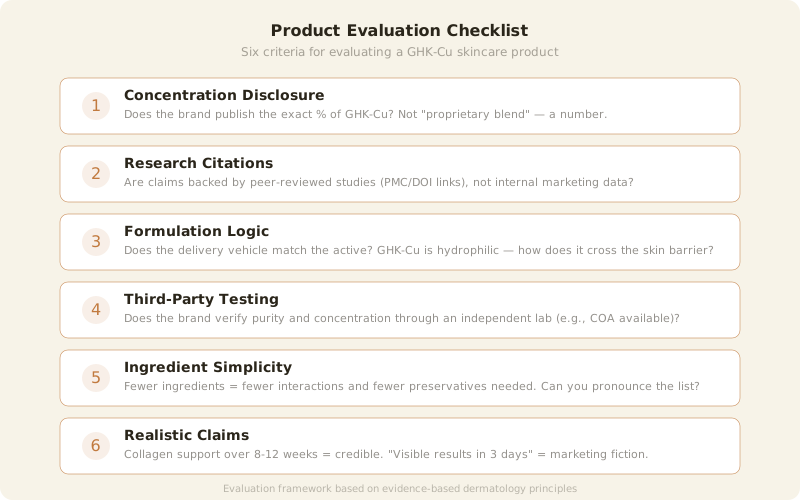
The market for GHK-Cu skincare is growing, and product quality varies enormously. Here is a framework for evaluation based on what the science requires for an effective product.
1. Concentration Disclosure
Non-negotiable. If a brand does not tell you how much GHK-Cu is in the product, you cannot assess whether it contains enough to be effective based on published research. “Contains copper peptides” is not concentration data.
2. Research Citations
A brand claiming science-backed benefits should be able to point to specific studies. Not “clinically proven” with no citation. Not “backed by research” with no references. Actual PubMed IDs, journal names, and author names.
3. Formulation Logic
Does the product’s format make sense for delivering a hydrophilic peptide? A pure oil serum with “copper peptide” listed last on the ingredient label raises questions about how the peptide is stabilized and delivered within a non-aqueous matrix.
4. Third-Party Testing
A Certificate of Analysis (CoA) from an independent laboratory confirms that the stated concentration matches reality.
5. Ingredient Simplicity
More ingredients does not mean better product. A 30-ingredient formula with GHK-Cu listed twenty-fifth suggests the peptide is present at trace levels.
6. Realistic Claims
GHK-Cu has genuine published evidence. A brand does not need to exaggerate it. “Reverses aging” is not what the research says.
Frequently Asked Questions
What does GHK-Cu stand for?
GHK-Cu stands for glycyl-L-histidyl-L-lysine copper(II). It is a tripeptide — a chain of three amino acids (glycine, histidine, lysine) — bound to a copper ion. In INCI labeling, it appears as “Copper Tripeptide-1.”
Is GHK-Cu safe for skin?
GHK-Cu occurs naturally in human blood plasma, saliva, and urine. The Cosmetic Ingredient Review (CIR) has reviewed Copper Tripeptide-1 and found it safe as used in cosmetic formulations.
How long does GHK-Cu take to work?
Published studies reporting measurable skin improvement typically use 8–12 week treatment periods.
Can I use GHK-Cu with retinol?
GHK-Cu and retinoids work through different mechanisms. There is no published evidence of dangerous interactions, but combining strong actives increases the risk of irritation. If introducing both, stagger their introduction by 4–6 weeks.
What concentration of GHK-Cu is effective?
Clinical and OTC formulations reporting results typically use 1–3%. Below 0.5%, questions arise about whether sufficient peptide reaches the viable epidermis.
Does GHK-Cu work for all skin types?
GHK-Cu’s mechanisms — collagen synthesis, MMP regulation, antioxidant defense — are universal to human skin biology. Published research has not identified skin type-specific contraindications.
Summary
GHK-Cu is a naturally occurring tripeptide with over 50 years of published research. Its documented mechanisms include collagen Types I and III synthesis, matrix metalloproteinase regulation, glycosaminoglycan production, antioxidant enzyme upregulation, and anti-inflammatory action. The 2015 gene expression analysis (PMC4508379) showed it modulates over 4,000 human genes across regenerative pathways.
Evaluate products on concentration disclosure, research citations, formulation logic, and third-party testing — not marketing copy.
References
Pickart, L., Vasquez-Soltero, J.M., Margolina, A. (2015)
GHK-Cu may prevent oxidative stress in skin by regulating copper and modifying expression of numerous antioxidant genes
Pickart, L., Margolina, A. (2018)
Regenerative and Protective Actions of the GHK-Cu Peptide in the Light of the New Gene Data
Pickart, L. (2008)
The human tri-peptide GHK and tissue remodeling
Siméon, A., et al. (2000)
Expression of glycosaminoglycans and small proteoglycans in wounds: modulation by the tripeptide-copper complex
Siméon, A., et al. (1999)
Glycosaminoglycan and decorin production stimulation by GHK-Cu
Canapp, S.O., et al. (2003)
The Effect of Topical Tripeptide-Copper Complex on Healing of Ischemic Open Wounds
Arul, V., et al. (2007)
Biotinylated GHK peptide incorporated collagenase into collagen matrix accelerates wound healing in diabetic rats
Bos, J.D., Meinardi, M.M. (2000)
The 500 Dalton rule for the skin penetration of chemical compounds and drugs
Benson, H.A.E. (2005)
Transdermal Drug Delivery: Penetration Enhancement Techniques
Continue reading
Peptide Science
The Copper Uglies: What’s Actually Happening to Your Skin
You started using a GHK-Cu product two weeks ago. Your skin looks worse. Before you throw the product away, understand what is happening at the cellular level.
9 min read

Peptide Science
GHK-Cu Concentration in Skincare: Why It Matters
A product with 0.001% GHK-Cu and a product with 1% GHK-Cu both say “Copper Tripeptide-1” on the label. They are not the same product.
14 min read
Peptide Science
GHK-Cu vs. Other Copper Peptides: What the Research Shows
"Copper peptide" is a category, not an ingredient. Three compounds carry the label — and their evidence bases are not interchangeable.
10 min read
Curious about the product?